How to Read Western Costume Without Letting It Explain Everything
Learn to read Western costume alongside gesture, setting, and framing so you can describe how a scene distinguishes characters without guessing at motives.
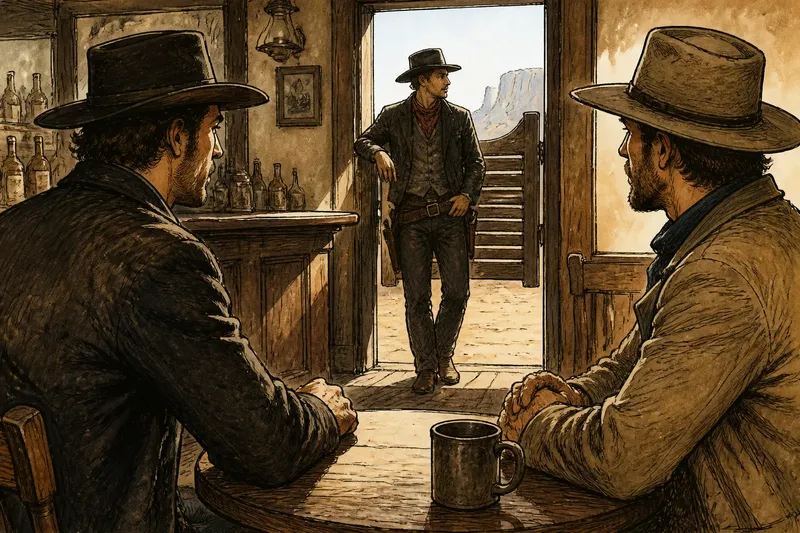
A dusty coat enters the frame before its owner does, and you may already be guessing who is coming. Reading Western costume well means pausing before that guess and checking what the body, setting, and camera add. The goal is to describe how a scene creates a visual impression, not to make one hat explain a whole character.
What should you notice before interpreting a costume?
Choose a scene with two or more characters sharing the frame: a conversation at a counter, a doorway standoff, or a group around a table. Watch it once without pausing. Note who draws your eye, who seems at ease, and who appears to be waiting. Those are observations, not conclusions; a character may stand out because the camera isolates them, not because their clothes are unusual.
On another pass, follow one person and record a visible detail in each of these categories:
- Costume: note silhouette, color, wear, fit, or a detail the camera makes clear. If a feature remains visible across shots, consider it a useful distinction; if it disappears, look to gesture or framing instead.
- Gesture: note hand placement, posture, and the timing of movement. If a gesture repeats or draws a response, consider its relation to the scene; if it appears once without emphasis, avoid treating it as a firm character clue.
- Setting: note nearby furniture, thresholds, and objects. If a location changes what the person can do, include that constraint in your reading; if it does not affect the action, treat it as background for now.
- Framing: note distance, position in the image, and who shares the shot. If the camera returns to a person or detail, consider that emphasis; if it does not, keep your interpretation modest.
Write “keeps one hand under the table” rather than “is dangerous.” The first describes something you can check again; the second guesses at motive.
How can Western costume distinguish characters?
Start with clothing when the scene makes a clear contrast: a pale shirt against a dark coat, a tidy jacket among worn garments, or a hat that stays visible as people move. Ask what that difference helps you see, then check the other visual elements. If the clothing contrast is clear but the camera never emphasizes it and the character’s actions do not connect to it, treat the detail as appearance rather than a complete explanation.
Look beyond garment type. Several characters may wear similar shirts and trousers, while fit, condition, layering, or the way a coat is worn separates them. A pushed-back sleeve changes the outline of an arm during a gesture; a buttoned coat may matter if the character repeatedly touches its edge. These details gain meaning from how the scene uses them, not from a universal code for what clothes mean.
Costume can also lose importance. A hat may establish a silhouette in a wide shot and vanish from attention when the camera moves closer. If that happens, framing may be doing more work than clothing. If a collar or cuff remains clear in a close view, the scene may be directing you toward a finer distinction.
When should you follow gesture instead?
Choose gesture when the clothes look alike or the scene shifts attention between speakers. Compare how people handle the same moment: taking a seat, reaching for a cup, turning toward a sound, or waiting through a pause. One person may settle into a chair while another perches on its edge. That is a visible difference, not an automatic personality diagnosis.
Timing matters as much as movement. Does someone act before another person finishes speaking, or wait for the room to go quiet? Do they look at the speaker, the doorway, or an object on the table? A still figure can affect the scene if others adjust around that stillness. A flourish may matter less if the camera gives it no emphasis and no one responds.
Say you rewatch an invented saloon exchange. Two characters wear nearly identical dark jackets. One keeps both hands visible and waits for the bartender to finish; the other taps the counter and turns toward the entrance. You note that the second character is near the doorway and stays there in the shot. The result is a supported description: gesture, setting, and framing distinguish the figures even though costume does little. You still cannot infer the second character’s motive from those details alone.
What can the setting tell you about a character?
Begin with the setting when a person’s position seems more noticeable than their clothing. Track thresholds, furniture, windows, counter edges, and open ground. Note who crosses the room, who has a barrier between them and others, and who stays in the background. Then decide: if a boundary changes someone’s movement or access, include it in your reading; if it has no visible effect, do not assign it symbolic meaning by itself.
A doorway is not automatically a symbol of freedom, and a chair is not automatically a sign of status. Start with the practical action: someone blocks a passage, chooses a seat with a view of the room, or stands beside a table rather than joining the group. If the camera makes that choice prominent, it may be part of the scene’s visual emphasis. If not, record it as a simple staging detail.
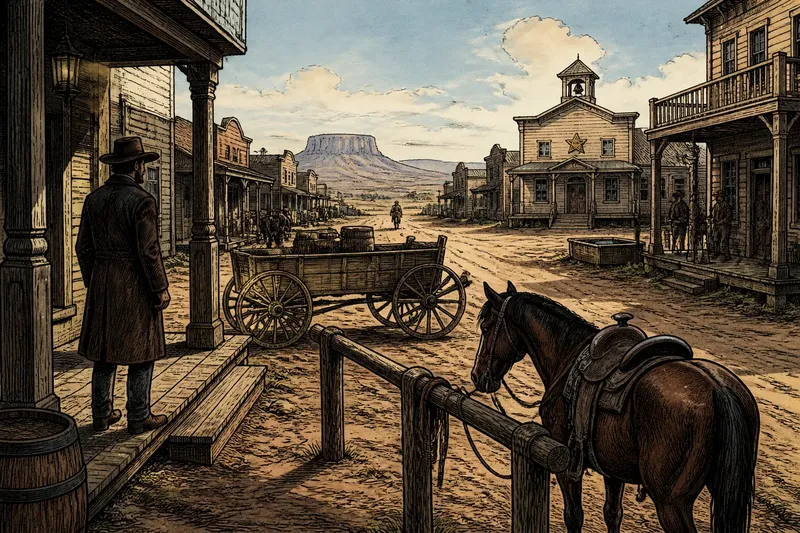
Outdoor scenes offer other clues. A character may stand apart against open ground, while another blends into a group or a busy background. Check whether the distinction comes from clothing, distance, movement, or several factors together. The landscape matters to the image when its scale and lines change how clearly the figures can be seen or how they occupy the frame.
When is framing the best place to start?
Start with framing when your attention seems directed before anyone speaks. Notice whose face gets a close view, who stays at the edge, and whether the shot groups particular characters together. Then compare what the cut changes. A close-up can make a small hand movement legible; a wide shot can diminish that gesture while making a doorway or another person’s position more visible.
Do not treat screen size as a fixed ranking. Someone can dominate a wide composition by standing alone in open ground, while a person close to the camera may feel boxed in. The frame works like a picture window: it shows some parts of the room clearly and leaves others outside your view. A character’s glance or turn can also point toward an unseen person or place.
If a costume detail seems meaningful, check whether the camera returns to it. Repeated attention can make a belt, coat, or hat distinctive; a detail glimpsed once may be incidental. This is a prompt for careful viewing, not a rule that every important object must receive a close-up.
Which visual clue should you follow first?
What if the characters wear similar clothes?
Start with gesture, then note where each person stands and how the camera groups them. If those details also look alike, track one character’s movement through the scene rather than forcing a costume distinction.
What if one outfit looks unusually distinctive?
Describe its visible features before assigning meaning. If the setting and framing keep the outfit in view, consider how the scene emphasizes it; if the detail fades from view, look for other clues.
What if the scene is crowded?
Follow one character through a short stretch of action. Note when they enter, where they pause, and whether the camera returns to them; if it does not, limit your reading to what is plainly visible.
What if there are almost no close-ups?
Use silhouette, spacing, and movement in the wider composition. If small costume details remain hard to see, do not guess at them; describe the figure’s outline or route across the set instead.
How can you compare two characters without overreading?
Make a four-column note labeled costume, gesture, setting, and framing. For two characters, write one visible detail in each column before adding an interpretation. If a column stays blank, leave it blank: the scene may distinguish the people through other means, or it may not distinguish them strongly at that moment.
Here is a fully worked invented comparison. Imagine a short scene in a ranch office. Two characters wear dark coats; one stands beside the door with a hand on the frame, while the other sits at a desk with both hands on the blotter. The camera first shows them together, then cuts closer to the seated person as they speak. You record matching costume, different gestures, different positions in the room, and a close view of the seated speaker. The resulting answer is that the scene distinguishes them through posture, setting, and framing, not clothing. The tradeoff is that you can describe who receives visual emphasis without claiming to know why either person chose that position.
On a later pass, focus on a change. If someone removes a hat, moves from the doorway to a chair, or turns away from the group, compare the image before and after. If the movement changes what the camera can show or who can approach, include that effect; if only the appearance changes, describe the visual change without inventing a motive.
For a Western costume reading, follow the clearest visible clue, then check it against gesture, setting, and framing. A worn coat may simply be worn unless the scene connects it to action or attention. A modest description—such as one figure remaining still while others move—can explain how a moment works without pretending the image tells you everything.