The Lone Gunfighter Myth and the Supporting Cast Around Him
The lone gunfighter myth can hide the people who shape a Western’s plot. Learn to spot how supporting characters’ duties, skills, and choices change events.
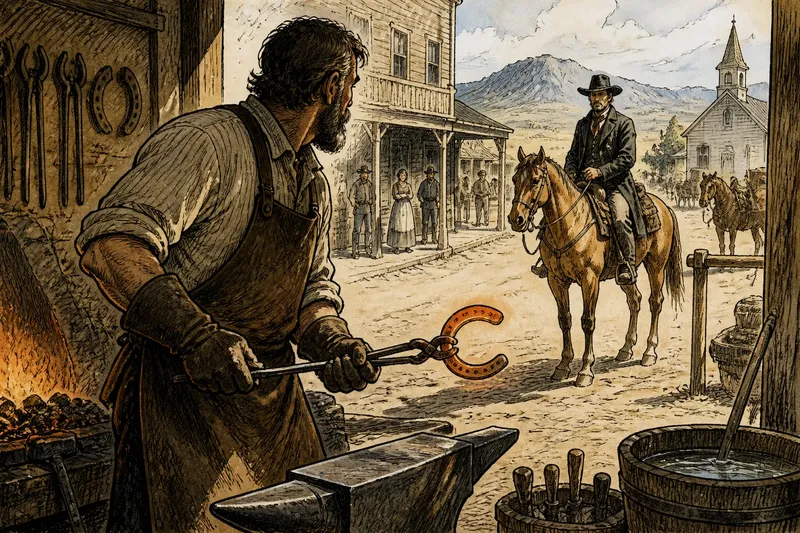
A blacksmith lifts a hot horseshoe from the forge, then tells the gunfighter waiting outside that he will not work for free. In a Western, a small refusal like that can alter the hero’s plans. The lone gunfighter myth may place one rider at the center, but supporting characters often shape the story through their jobs, knowledge, and obligations.
To see how, look beyond who gets the most screen time. A character’s role in the plot may come from practical expertise rather than authority or a dramatic speech. The person who knows which bridge is washed out, keeps the town’s records, or tends the wounded can change what the hero is able to do.
How does the lone gunfighter myth narrow the story?
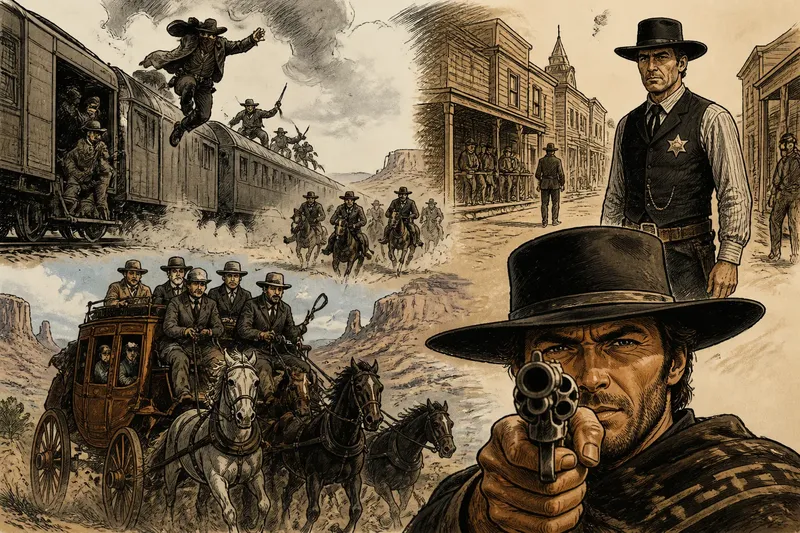
The lone gunfighter is a compact storytelling device: an outsider arrives, meets a threat, and acts before the audience needs to know every local detail. That structure gives the plot a clear center and makes the hero’s skill easy to follow.
It can also make other people seem interchangeable. A supporting character may appear only to deliver a warning, suffer a threat, or point the hero toward the next confrontation. Ask what the character knows how to do, and whether that ability matters after the scene ends. A ranch hand who can identify a stolen horse, for instance, offers a different kind of contribution from a shopkeeper who can extend credit.
What work gives supporting characters a distinct role?
Western stories often use familiar occupations: sheriff, rancher, saloon owner, preacher, doctor, or newspaper editor. The job can quickly orient the audience, but a specific skill or responsibility makes the person more than a label. A doctor may have to choose whose injuries to treat first; a printer may decide whether to publish a threatening notice; a ranch cook may know which workers are missing from the bunkhouse.
Those duties create story possibilities that do not depend on a character becoming a second gunfighter. They can provide access, delay a plan, preserve evidence, or expose a cost the hero has not considered. The useful question is not only “What is this person’s job?” but “What can this person do that no one else in the scene can do?”
Imagine a fictional Western in which a doctor has one wagon available to move an injured deputy, while the hero wants to use it to chase an outlaw. The doctor checks the deputy’s condition, refuses to hand over the wagon, and asks a stable worker to prepare another horse. The visible result is that the chase is delayed while the deputy gets help; the doctor’s medical duty, not a duel, changes the action.
How do local skills change a Western plot?
Notice the practical knowledge characters bring into a scene. A telegraph operator may know which messages arrived before the line went dead. A blacksmith can recognize damage to a horse’s shoe. A cook who feeds a ranch crew may notice that someone has stopped showing up for meals. These details can create tension or redirect the hero without turning every local resident into an informant.
When a skill appears, follow its consequences. Does the information help the hero act, or does the character use it to protect someone else? Does a craft solve a problem, or reveal why the proposed solution will fail? That distinction gives the supporting role its own purpose within the plot.
How can you track what a supporting character contributes?
Choose one character and follow their work through a scene or a sequence. Record what they know, what they do with that knowledge, and what changes afterward. A short note is enough to distinguish a character who merely explains the plot from one whose actions redirect it.
- Notice a specific skill: If the character can repair, treat, track, record, or transport something, then note whether the scene uses that skill; if it changes an available option, follow that consequence, but if it does not, look for another contribution such as a refusal or delay.
- Check the character’s responsibility: If someone depends on the character for work, care, or access, then ask whether that obligation affects the hero’s plan; if it does, track the resulting adjustment, but if it does not, note what the story leaves out.
- Follow useful information: If the character shares a fact, then identify how they learned it and what action follows; if it directs the plot, note the new choice, but if nobody responds, treat the exchange as background rather than a turning point.
- Watch for a practical refusal: If the character withholds a horse, room, tool, or service, then ask what the hero must do instead; if the refusal changes the route or timing, record that effect, but if the hero bypasses it easily, notice how little leverage the role has.
- Trace the aftermath: If a conflict damages a workplace, injures a worker, or interrupts a duty, then check whether the film returns to that consequence; if it does, note who handles the problem, but if it does not, recognize that the story has moved on without showing the repair.
- Compare proposed solutions: If a local character suggests a method other than force, then watch whether the hero considers it; if the plan is adopted or rejected with consequences, note how the alternative shapes the plot, but if it is ignored without effect, mark the character’s limited influence.
Say you are watching an invented scene in which a ranch cook sees that a missing worker’s meal has gone untouched. The cook tells the sheriff, who asks the stable hand to check the worker’s cabin; they find the man’s coat and realize he may have left on foot, so the sheriff postpones the ride to the canyon and sends help along the road instead. The starting clue is an untouched meal, the actions are a report and a search, and the observable result is a changed plan. The cook’s ordinary task becomes part of the plot because the film follows what the character does with what they notice.
What questions help you read supporting roles?
Does a supporting character need many lines to matter?
No. A quiet action can change the choices available to the hero. Notice whether the next scene unfolds differently because of it.
How can an occupation avoid feeling like a label?
Look for a responsibility or skill that affects events, such as a doctor’s triage decision or a telegraph operator’s handling of a message. If the job never shapes an action or choice, it may function mainly as shorthand.
Can a supporting character affect the story without opposing the hero?
Yes. A character may help the hero while setting conditions, protecting a duty, or choosing a safer method. Cooperation can still redirect the plan.
What makes a character’s knowledge feel specific?
The story gives the character a plausible reason to know the detail and shows what follows from sharing or acting on it. A fact that appears only to brief the hero may feel like plot delivery rather than part of the character’s life.
What can a character’s work reveal about the story?
Think of a supporting role as a tool in a saddlebag: its value becomes clear when a particular problem calls for it. A blacksmith’s craft, a doctor’s judgment, or a cook’s routine can open one path and close another without taking the gunfighter out of the center.
When reading the lone gunfighter myth, follow one person’s task from its first appearance to its consequence. Ask what the character knows, what they choose to do with it, and which practical option changes as a result. That approach keeps attention on character craft while revealing how a Western builds its plot from more than one kind of skill.